
Dating in LA Through the Decades: A History of How Singles Met before Dating Apps
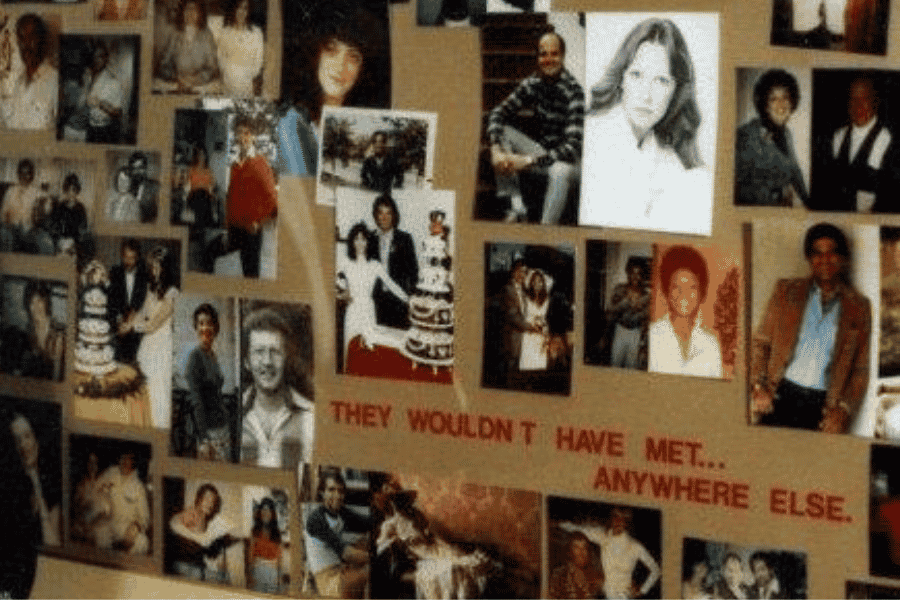


Los Angeles has a surprisingly long history of experimenting with how people date. From crowded singles bars in the San Fernando Valley to video matchmaking in Century City, some of the biggest changes in modern dating have happened right here.
LA County was the birthplace of modern speed dating, helped pioneer location-based dating apps, and became home to Tinder. More recently, the city has seen renewed interest in meeting people face-to-face, often through events designed specifically for singles.
To understand how we got here, we're looking back at five decades of dating in Los Angeles: what people tried, what caught on, and what eventually came back around.
1970–1985: The Singles Bar Era
Before dating profiles, there was the singles bar.
The modern singles bar took shape in the 1960s, when New York entrepreneur Alan Stillman opened the first TGI Fridays with a particular audience in mind: single adults looking for somewhere to meet people. The idea was simple but influential. Instead of relying on friends, workplaces, or chance encounters for introductions, singles could go somewhere specifically designed for socializing.
By the 1970s and 1980s, Los Angeles had developed a thriving singles-bar scene of its own. From Beverly Hills to the San Fernando Valley, certain restaurants and nightclubs became known as places to meet potential dates.
Few captured the era quite like The Red Onion in Woodland Hills.
Located at 6424 Canoga Avenue, the Red Onion was a popular singles destination. In a 1986 feature, the Los Angeles Times described a crowded social scene where patrons went as much to meet one another as to drink or dance.
Its popularity sometimes became a problem. On Halloween night in 1985, fire inspectors counted 1,100 people inside a venue authorized for just 567. The overcrowding prompted action from city officials.
The Red Onion eventually closed in 1993, but its story captures something important about dating before the internet: finding someone often meant physically going where other singles gathered.
The Big Shift: Bars and nightclubs became intentional destinations for meeting potential partners, rather than leaving introductions entirely to friends or chance.
Sources: Los Angeles Times, “Looking for Those Who Look for Mr. Goodbar” (1986) and “Woodland Hills Watering Hole Under City Pressure” (1985).
1976–1994: The Video Dating Era
Long before people could scroll through dating profiles on their phones, Angelenos were watching videos of potential dates.
In 1976, Los Angeles entrepreneur Jeffrey Ullman launched Great Expectations from a small, windowless office in Century City. The idea reportedly came after a friend complained about the awkwardness of blind dates. Ullman wondered whether video introductions could give people a better sense of whom they might want to meet.
Members completed questionnaires, recorded short interviews, and browsed other members' profiles and videotapes at the company's offices. Instead of agreeing to a blind date, they could see and hear someone before deciding whether to pursue an introduction.
It was an early version of the modern dating profile, although considerably more expensive and time-consuming.
And the business found an audience. By February 1986, Great Expectations reported approximately 8,500 current members across Los Angeles, Orange, and San Diego counties. Membership packages at the time ranged from hundreds to nearly $2,000.
The service later expanded across the country. What began as a local experiment demonstrated that people were willing to invest considerable time and money to make dating feel a little less random.
The Big Shift: Singles could evaluate potential partners before meeting them, laying the groundwork for the profile-based matchmaking that followed.
Sources: Los Angeles Times, “They Found Their Valentines Via Videotape” (1986) and “Love God From Hell” (1994).
1995–1997: Dating Goes Online
The next major change didn't require a nightclub, a videotape, or even leaving the house. It required an internet connection.
When Match.com launched in 1995, it helped bring matchmaking into the emerging world of online profiles. Instead of visiting a dating service to browse potential partners, singles could search from their own computers.
For Los Angeles, where neighborhoods could feel like separate cities and meeting someone across town might involve a lengthy drive, the appeal was easy to understand. Online dating opened up possibilities beyond coworkers, friends of friends, and the places people regularly visited.
It also introduced a new kind of dating ritual: writing a profile, choosing a photo, and sending messages to people you'd never met.
By 2000, the Los Angeles Times was documenting how local singles were navigating internet dating. One woman featured in its reporting received 75 messages from prospective dates during her first weekend online.
The technology was new, but the question it tried to answer was familiar: how do you find the right person among millions of possibilities?
The Big Shift: Singles no longer needed to be in the same room, neighborhood, or social circle to discover one another.
Source: Los Angeles Times, “Dates That Click” (2000).
1998–2008: The Rise of Speed Dating
As dating moved onto computer screens, another influential dating format was being developed in Beverly Hills. This one brought people back into the same room.
In 1998, Rabbi Yaacov Deyo and a group of collaborators organized what is widely recognized as the first modern speed dating event at a Peet's Coffee & Tea in Beverly Hills.
Originally intended to help Jewish singles meet potential partners, the concept offered a structured alternative to traditional mixers. Participants moved through a series of brief conversations, then privately indicated whom they wanted to see again.
It was an efficient approach to an old problem. Rather than committing an entire evening to one blind date or trying to approach strangers at a crowded bar, singles could meet several people in a single event.
The format quickly attracted interest beyond its original community. It spread to different cities, age groups, and audiences, becoming one of the most recognizable forms of organized dating.
And unlike many dating trends from the 1990s, it never really disappeared.
The Big Shift: Dating became a structured social experience, giving singles multiple face-to-face introductions in one evening.
Source: Los Angeles Times, “Speed Dating Is So Popular in Los Angeles. Is It for You?” (2023).
2009–2020: The Dating App Revolution
Online dating had already changed how Angelenos met. The arrival of smartphones was about to change it again.
In 2009, Grindr launched in Los Angeles, using location technology to help gay and bisexual men discover other users nearby. Instead of searching through a database from a desktop computer, people could find potential connections based on their current location.
Three years later, Tinder emerged from West Hollywood. Its early approach to mutual matching, followed by the swipe interface that became its signature, helped turn browsing potential dates into an everyday smartphone activity.
Both apps would go on to influence dating far beyond Southern California.
The shift was dramatic. In 2013, 11% of American adults reported having tried an online dating site or app. By 2019, that figure had reached 30%, according to Pew Research Center. These are national figures, but they illustrate how quickly digital dating entered the mainstream.
Then came 2020. As COVID-19 restrictions closed bars and social venues throughout Los Angeles County, digital communication became an even more important part of dating. Video calls and online introductions helped people maintain romantic possibilities when meeting in person was difficult.
Within a generation, dating had gone from requiring a particular destination to being available virtually anywhere.
The Big Shift: Angelenos went from searching for potential dates on computers to carrying an entire dating pool in their pockets.
Sources: Pew Research Center, “Online Dating & Relationships” (2013), Pew Research Center, “The Virtues and Downsides of Online Dating” (2020), and Los Angeles Times, Tinder (2013).
2021–2023: The Return of IRL Dating
After years of social distancing, closed venues, and dating through screens, something familiar started looking appealing again: meeting someone in person.
As Los Angeles reopened, singles began returning to organized dating events. Speed dating, a format invented in Beverly Hills more than two decades earlier, was finding a new audience.
And there was evidence behind the resurgence.
According to Eventbrite data reported by the Los Angeles Times, the number of speed dating events on the platform increased by nearly 75% from 2021 to 2022. Attendance at dating and singles events grew another 42% from 2022 to 2023, according to Eventbrite's national figures.
The revival wasn't limited to traditional heterosexual dating events. Across LA County, organizers were developing speed dating experiences for different ages, sexual orientations, interests, and communities.
For people accustomed to evaluating potential dates through photos and messages, the format offered something unusually straightforward: an actual conversation.
The appeal wasn't necessarily nostalgia. Many younger attendees had never experienced dating before smartphones. Meeting multiple people face-to-face was, in some ways, a new experience.
The Big Shift: After years of digital-first dating, face-to-face introductions became an attraction in their own right.
Sources: Los Angeles Times, “Speed Dating Is So Popular in Los Angeles” (2023) and Eventbrite, “Ongoing Surge in Speed Dating Events”. Growth figures are nationwide Eventbrite platform data.
2024–2025: The Rise of Creative Dating Events
Once singles events were back, organizers began reconsidering what those events could look like.
Speed dating remained a popular option, but not everyone wanted to spend the evening rotating through one-on-one conversations. Some preferred meeting people while playing trivia, watching comedy, participating in an activity, or exploring a shared interest.
There was also a practical advantage to organized events. At an ordinary bar, approaching someone could mean guessing whether they were single, interested, or even comfortable being approached. At a singles event, the intention to meet people was established before anyone arrived.
Organizers could also create more specific groups based on age, interests, relationship goals, or location, offering a more focused alternative to an open-ended mixer.
The numbers suggested demand for these experiences. Eventbrite's 2024 dating report found that attendance at athletic dating events increased 136% and game-based dating events increased 88% from 2022 to 2023. These figures measured nationwide activity on the platform.
Los Angeles had its own particularly inventive examples.
In October 2024, the Los Angeles Times covered All Hands on Deck, a dating show organized by The Next Fun Thing in which people used PowerPoint-style presentations to pitch their single friends to an audience. The event drew roughly 200 attendees, turning the familiar ritual of setting up a friend into a live production.
It was part of a broader change in how dating events were being designed. Instead of expecting singles to arrive and figure everything out themselves, organizers were giving them activities, conversation starters, and reasons to interact.
The Big Shift: Singles events evolved from simply gathering people in one place to creating experiences that made meeting someone easier.
Sources: Eventbrite, “Niche to Meet You” (2024) and Los Angeles Times, “Want to Help a Friend Find Love? Give a PowerPoint Presentation” (2024).
2026–Present: Technology Meets IRL Dating
Dating apps made discovering potential partners easier. In-person events made it easier to find out whether there was chemistry. Now, some organizers are experimenting with ways to bring those advantages together.
The idea addresses a familiar problem. Even at an event full of singles, people may not know whom to approach. Someone could be highly compatible with another attendee and never get the opportunity to meet them.
At Los Angeles-based The Next Fun Thing, matchmaking technology is incorporated into the event itself.
Attendees complete profiles before arriving, allowing the system to consider factors such as age, interests, and dating preferences. At speed dating events, that information helps organize curated introductions among people who have actually checked in.
At other events, including singles trivia and mixers, technology can help participants discover compatible attendees, navigate the room, and privately express interest in people they've met.
The objective isn't to replace the experience of meeting someone. It's to make the introductions more intentional while leaving chemistry to the people involved.
This is still an emerging approach rather than a universally adopted industry standard. But it represents an interesting development in the relationship between online matchmaking and offline dating.
The Big Shift: Dating technology isn't limited to helping people find someone online. It can also help them make more meaningful introductions once they're in the same room.
Source: The Next Fun Thing and its event-based matchmaking platform. This section describes the company's approach rather than a statistically established industry-wide trend.
So, What's Next for Dating in LA?
For all the technological changes of the past five decades, there's something familiar about where Los Angeles dating has ended up.
The singles bars of the 1970s offered a place where people knew they could meet other singles. Video dating introduced the idea of reviewing potential partners before meeting. Speed dating created a structure for face-to-face introductions. Dating apps expanded the possibilities considerably.
Today's dating events borrow elements from all of them.
The technology has changed. The venues have changed. Even the expectations around approaching a stranger have changed.
But the underlying question remains remarkably consistent: Where do you go to meet someone?
And now, a Shameless Plug.
Looking for places to meet singles IRL? We happen to know a few.
At The Next Fun Thing, we host speed dating, singles trivia, mixers, live shows, and other events designed to make meeting people in LA a little easier.
Whether you're looking for a relationship or just want to put yourself out there, we've got options.


